More than 160 journalists have been killed in Mexico since 2000. State of Silence is about four who keep reporting anyway.
It almost wasn’t a film. Maza first pitched the project as a six-episode series, and the streaming platform passed: too political, too risky, not worth the attention. The rejection carries its own grim irony, since looking away from a dangerous story is the very reflex the movie exists to break. So he rebuilt it as a feature and stepped in to direct.
A Kid Who Drew His Way In
Maza doesn’t have the film-family origin story. What he had was a compulsion to draw: tiny sketches in the margins of class notes, soccer uniforms designed in the back of notebooks, and a restless itch to escape boredom. The turn came in a literature class where a teacher had students write their own stories, and Maza and a friend built a quiet rivalry over whose got picked. One Saturday he sat down to write, started sketching alongside the words, and realized the visual was the way through.
He started in fiction. He wrote scripts, directed shorts, worked as an AD, and still loves it, but fiction wore on him for being bureaucratic: script, then budget, then permission, then maybe a camera. Documentary offered the opposite. He calls it a way of putting your spoon into the world. During the pandemic he made a doc that began two weeks into lockdown, watching a global event reshape people in real time through the lens. For Maza, the camera isn’t a recording device so much as a way of slowing down enough to actually see a place. “It’s gotten to a point where it’s a way to approach life itself,” he says.
Turn the Camera On as Late as Possible
The counterintuitive core of his method is simple: don’t shoot yet. Maza turns the camera on as late as he possibly can. First comes a pen, a notebook, and a lot of listening. An idea is promising and full of holes; it only becomes a documentary, he says, when you’ve found the people who can tell it and they start to disagree with each other. Only then does the camera come out. His early projects taught him the hard way: roll first and you drown in footage that turns out to be research.
Once he’s shooting, he trusts a strange law he’s learned by doing: life repeats itself. Miss the shot of someone walking through a doorway as the dog bolts out, then stay put, because a version of it will come around again. The discipline is patience that looks, from the outside, like meditation: a small crew waiting in silence until the real world hands over a moment nobody could have staged.
Structure It Like Fiction
Then he structures it like fiction. Index cards on a wall, scenes shuffled into shape, a technique he imports unapologetically along with talking heads, post-production, and every other tool he can reach for. He’s allergic to documentary dogma, the idea that the form is only ever one pure thing. Talking heads aren’t fashionable right now, he notes, but a well-placed one is as good as the most artful vérité; the trick is never using a tool to explain what an audience could feel on its own.
His touchstone here is the film he reached for at the start. Collective, directed by Alexander Nanau, is a critically acclaimed 2019 documentary that follows Romanian investigative journalists as they uncover vast healthcare corruption and systemic negligence in the aftermath of a deadly nightclub fire. The exposé makes the case for the value of an independent press, and it does so while staying shapeless and organic on the surface, ruthlessly intentional underneath. Maza prefers it to Icarus because it stays close to the action instead of lecturing you.
The Film: Four People Who Wouldn’t Quit
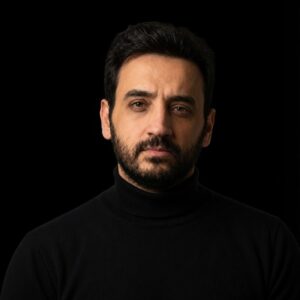
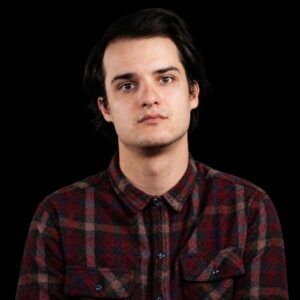
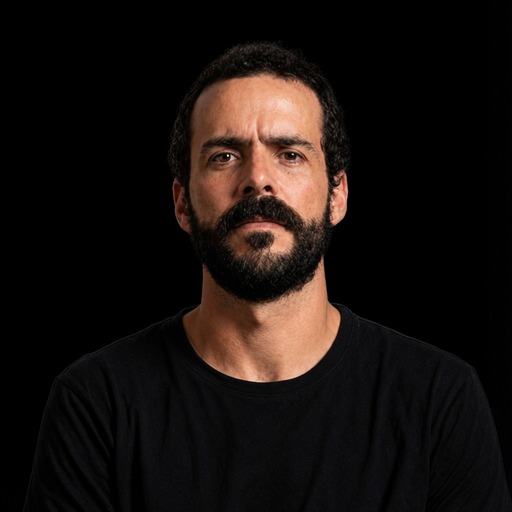
State of Silence follows four independent Mexican journalists: María de Jesús Peters, Juan de Dios García Davish, Marcos Vizcarra, and Jesús Medina. They cover corruption, cartel violence, and water stolen from farmers. The reporting makes them targets, and some have had to flee the country to stay alive. Medina calls himself an amplifier. His job is to carry the stories of people living under narco-politics, in a place where crime and government blur together and whole regions have gone silent out of fear.
The project didn’t start with Maza. It started with Joris Debeij, a Dutch filmmaker living in the U.S., and his friend Jan-Albert Hootsen, the Mexico representative for the Committee to Protect Journalists. They brought it to La Corriente del Golfo, the Mexico City production house run by Diego Luna and Gael Garcia Bernal, where producer Abril López Carrillo took it on. When the series idea collapsed into a feature, the roles reshuffled: Maza directing, Debeij as an executive producer, Hootsen staying on as an on-camera presence who also opened doors to the journalists themselves.
What Luna brought was conviction and clout. The conviction is real, he cares deeply about the danger Mexican journalists face. The clout is practical: a Tribeca premiere with his name on it gets noticed back in Mexico, including by the people who should answer for what the film documents.
The Threats, and the Solitude Underneath
The dangers in the film aren’t all out in the open. The ones that follow you home are worse. A text from a number you don’t know: we know where you live, we know where your kids go to school. Graffiti on the wall by your door. A car idling outside at three in the morning. The feeling that someone has been in your email and deleted something. Hootsen puts it plainly in the film: a threat a month doesn’t make the next one easier, each one hits like it’s the only one. One journalist describes finding out the government had been spying on her, and feeling, under the fury, a strange relief. Everyone had called her paranoid. Now she had proof she wasn’t crazy.
Strip away the surface, Maza says, and the film is really about being left alone. Journalism is a social act. You go out, you talk to people, you hand what you learn back to the public. And yet the people doing it are abandoned by the readers, the employers, and the government that should protect them. He’s clear-eyed about who it sorts out: the ones who quit for a safer job, the ones who drift to lighter work, and the ones who keep going even alone. He also resists the urge to lionize them. We don’t expect dentists to be heroes, he points out, and a slightly cowardly one is still fine enough.
We need journalists that don’t have to be like superheroes.
The fact that they currently have to be is the indictment the film keeps returning to.
Craft That Matches the Subject
Maza’s visual choices all serve one goal: keep the journalists human and grounded, never symbols. He and his DP, Odei Zabalta, built the film around quiet following shots. The camera trails a journalist from behind, holds, and lets them settle into the frame, so you’re with them before anyone says a word. The other rule was to never pull a subject out of their world. Where a journalist lives shapes what they cover: the reporter near the border works on migration, the one near the forest works on what’s being cut down and hauled off. So Maza keeps each of them inside their own place, shooting them at eye level with the world they report on.
His editing runs on the same instinct, and it doubles as his advice to anyone starting out.
You have to arrive late to push the red button, and you have to stop early.
A documentary, he says, gets written three times: once when you plan what you hope to find, once when you shoot it, and once, for real, in the edit. He’s watched filmmakers shoot for eight years and end up just trying to survive their own footage.
Three Premieres, Two Continents, One Week
For a moment, State of Silence seemed to be premiering everywhere at once.
Its world premiere took place at Tribeca on June 10 at the SVA Theater. Almost immediately after, the film headed to Sheffield DocFest for its European premiere and to the Guadalajara International Film Festival for another major screening. Two of those screenings landed on the same day, on different continents, forcing Maza to split his team in half and send each group into a different festival orbit.
He doesn’t romanticize what it took to get there. This was the kind of film that makes you question why you started in the first place. Maza and Marcus circle around the same idea: when a project scares you, when it feels too big for the person you are at that moment, that may be the sign you are standing in the right place.
What Maza didn’t want was another statistic. Mexico has no shortage of those. People read the numbers, absorb the horror for a second, and move on. He wanted to give the crisis a face. He wanted the audience to feel the danger, the grief, and the moral weight of it, then leave with the sense that indifference was no longer an option.
“We’re storytelling animals,” he says. For Maza, that is not a soft idea. It is the whole wager of State of Silence: that a story, told with enough honesty and force, can still reach through the noise and make another person care.