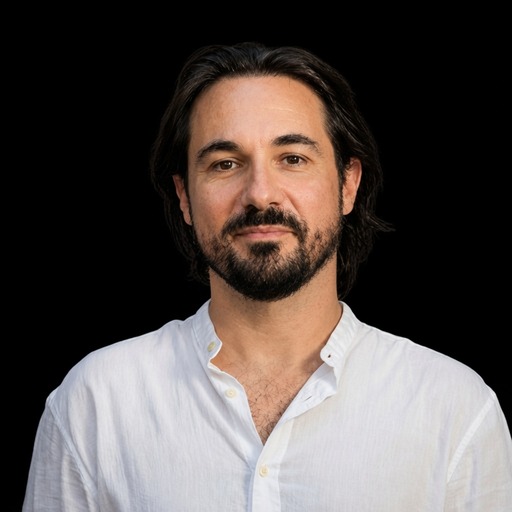
Parsifal Reparato is an Italian anthropologist and filmmaker who spent five years building She, a documentary about the women who assemble the world’s electronics inside one of the largest industrial parks on earth, in Bắc Ninh, northern Vietnam. It premiered in Locarno’s Critics’ Week, won the Feature Documentary Award at the Adelaide Film Festival, and has since gathered honors across four continents. A Neapolitan who founded the production house AntropicA and an Ethnographic Filmmaking Lab, Reparato first visited Vietnam in 2012, and She grew out of years of academic field research into workers’ rights. It is the second chapter of a planned trilogy on global female labor, following his 2017 film Nimble Fingers, and it was made with the backing of an Italian labor union and in collaboration with universities in Naples and Hanoi.
We don’t want to judge. We want to see the system, how it works, how it changes the people.
Eighty Thousand Women, One Voice
The plant Reparato films employs on the order of eighty thousand people, roughly four in five of them women, working twelve-hour shifts around the clock. Many are migrants from the countryside who see their children only by video call, whose health erodes on the line, and who are often replaced by their late thirties. He keeps every face and body anonymous, revealing them only in fragments, and braids their testimonies into a single choral figure: she is mother, daughter, wife, migrant, dreamer, all at once. He began shooting in late 2020, the pandemic stretching the work across years as he conducted scores of interviews and slowly earned the trust of women for whom speaking about their conditions carries real risk. The system, the film quietly insists, exists to supply the smartphone in your own pocket. Forbidden from filming inside the factory, he and cinematographer Lorenzo Casadio reconstructed its interiors on a stark studio stage, a formal solution born of necessity that became the film’s beating heart.
The Black Box
The centerpiece is a reenactment staged in a bare black space, faces covered, the way a play strips a stage to its bones.
The device is borrowed openly from Lars von Trier’s Dogville, that Brechtian experiment in which an entire town is drawn in chalk on an empty floor so the machinery of exploitation has nowhere to hide. Reparato brought real workers into his black box, along with a line manager who defends the system fiercely, the man who insists that if they refuse to work this way the economy collapses and the world loses its phones. He stood them there for twelve hours, as the factory would, the empty stage doing exactly what von Trier’s chalk outlines do, forcing attention onto behavior rather than scenery, and then offered them a fiction: you may rebel now, tear down the set, turn on the manager, do anything you like.
What Rebellion Actually Looked Like
What happened next is the discovery that reorganizes the whole film, and it upends Reparato’s own expectation as an avowed Marxist from a working-class family. He had dreamed, he admits, of an uprising.
They were tired. They wanted to sit down, to massage each other.
Given the chance to revolt, the workers declined. They were too exhausted. They sat, they eased one another’s aching bodies, they made a kind of peace with the manager, and they rested. The manager wept. Here’s the stance worth drawing out: for a working class this depleted and this atomized, one that can no longer quite recognize itself as a class at all, rebellion does not look like a raised fist. It looks like rest. The refusal to work becomes the only protest left, and exhaustion itself turns into a form of resistance. The film’s Italian title would translate as a story about hidden resistance, and this is what hides inside it, the radical act of a body insisting on its own right to stop. What the workers collectively staged in that room, Reparato has said, is less an ending than a proposal, the right to exist as people and not only as labor force, and maybe the beginning of a new story.
Refusing the Easy Version
That discovery only becomes possible because Reparato refuses every easy version of his own story. He chose to film not the worst factory but one of the best, where conditions are comparatively humane, because a freak show would let viewers off the hook. His central worker defends the plant rather than denouncing it. The local landlord who might have been the villain becomes, on closer acquaintance, someone the crew came to love, himself a casualty of the same machine. Reparato’s instinct is anthropological rather than prosecutorial, naming a sin without ever stooping to brand a single sinner, and he holds the whole system in view, including the people it has turned into its enforcers. His film belongs beside two he doesn’t mention: American Factory, with its clear-eyed study of labor caught in globalization’s gears, and Zhao Liang’s Behemoth, that infernal vision of human bodies fed to industry.
The Mirror Turned on Himself
The most uncomfortable thread is the one Reparato turns on himself. Before filmmaking, he spent three years selling smartphones for a multinational, the very devices these women assemble; his father called his decision to quit and make documentaries a form of suicide. He shares this history with the workers to bond with them, to say I am like you, and they hand it back to him sharpened: you also work fifteen-hour days, you exploit us in order to film our exploitation. He burned five years, a creative partnership (a first editor worked on it for four years before that collaboration broke, leaving Alice Roffinengo to shape the final cut), and his own health on this film, and he knows the charge lands. Filmmaking, in this light, is just another kind of labor that can consume the laborer. It clarifies the title. To “make the struggle worth it” is not a motivational slogan but the question the entire film asks of struggle itself, the workers’ and his own alike.
The Same Refusal
His advice to younger filmmakers carries that same hard honesty. Be brave, trust your voice early, do not waste years, he says, and in the same breath: be ready to lose everything, be ready to be poor, ask yourself whether you are ready to die for what you want. There is a new shadow over the film, too, the Industry 4.0 robots already replacing the workers, one of whom trained the very machine that took her job; the robots we build, he suggests, end up resembling the people we risk becoming. The film’s own path has been the opposite of disappearance, traveling from Locarno to Adelaide to Florence and on to theatrical runs in London, New York, and Toronto, and to Italian television. And yet the deepest rhyme is between the women resting in the black box and the filmmaker who wrecked himself to film them. Both are the same refusal, the refusal to let the system decide what your exhaustion is finally for. The workers, given a stage and total freedom, chose to reclaim their tiredness as their own. Reparato spent half a decade insisting his could mean something, and refused to film these women as victims or as a spectacle of misery. That is where the struggle, for both of them, becomes worth it: not in some promised future uprising, but in the stubborn present-tense dignity of people, and a filmmaker, who decline to be reduced to what they produce.