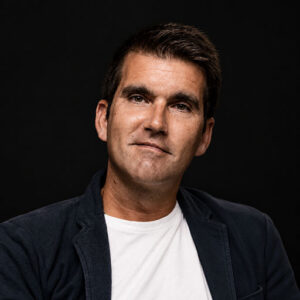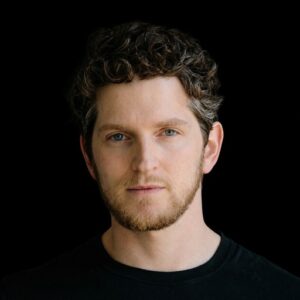
For two decades, Shih-Ching Tsou was the other name on the credits, the producer and co-director beside Sean Baker on Take Out, Tangerine, The Florida Project, and Red Rocket. With Left-Handed Girl, her solo directorial debut, she steps forward: a Cannes Critics’ Week premiere, Taiwan’s submission for the Best International Feature Oscar, and now on Netflix, shot almost entirely on an iPhone 13.
If you don’t have a good story, no matter how expensive your camera is, no matter how good your DP is, it doesn’t really work.
A Family in the Night Market
Left-Handed Girl follows a single mother, Shu-Fen (Janel Tsai), who returns with her two daughters from rural Taiwan to open a noodle stand in Taipei’s bustling Tonghua Night Market. Her university-aged daughter I-Ann takes a job at a betel nut stand to help with the bills, while her five-year-old, I-Jing (a remarkable Nina Ye), draws the disapproval of a superstitious grandfather. Tsou cast with the same resourcefulness she shoots with, discovering the young woman who plays I-Ann on Instagram for what became a striking screen debut. The grandfather forbids the girl from using her left hand, her “devil hand.” From that small cruelty, three generations of family secrets begin to unravel. The story is rooted in Tsou’s own upbringing in Taipei, a place she describes as suffocating for girls, where you could not ask questions or show emotion and male favoritism went unspoken because no one believed it could change. She left for a master’s degree in New York, met Baker at school, and found in film what she calls a window into other lives, a way to hand the microphone to people who rarely get to hold it. Tsou and Baker wrote the script back in 2010, after a month wandering Taipei’s markets for inspiration, then waited more than a decade for the financing of a fully Mandarin-language film to come together.
When Technique and Resilience Become One Thing
Here’s the stance worth drawing out, because the episode title names technique and resilience as two separate keys, and the iPhone proves they are really the same one. Shooting a Cannes and Oscar contender on a phone is not a gimmick or a budget compromise dressed up as a virtue. It is the literal embodiment of Tsou’s entire creed: the story is the center, and everything else is negotiable. The expensive camera, the big crew, the proper financing, all the things that kept Left-Handed Girl on a shelf for the better part of fifteen years, turned out to be exactly the things she could do without. The iPhone is “more with less” made physical. Strip away everything that is not the story, and the film is still there. She has known this since the beginning: her first feature with Baker, Take Out, was made for a few thousand dollars and still announced two filmmakers worth watching.
The Delay Was the Resilience Doing Its Work
And this is where the two ideas collapse into one.
Everything has its timing. Every film has its own fate.
The long delay was not dead time; it was resilience doing its quiet work, and the iPhone is what resilience looks like when the tool finally catches up to the need. A filmmaker who had given up would never have reached the moment the technology arrived to meet her. A filmmaker who insisted on waiting for the “real” camera and the full budget might still be waiting. Tsou recognized that the constraint was not an obstacle to the film but the form of it: a story set in Taipei’s actual night markets, shot guerrilla-style on a phone in streets she could not afford to close, would carry a stripped-down authenticity no amount of money could buy. The iPhone, paired with anamorphic adapter lenses and a tiny mobile crew, let her slip unnoticed into a working market she had no budget to shut down. Her love of the Dogme 95 movement is the tell. That movement, too, turned poverty into principle, banning the very Hollywood apparatus that announces “production value” so that story and performance had nowhere to hide.
The Left Hand Was Never Wrong
The connection to the film’s own subject is almost too neat to be accidental. Left-Handed Girl is about a child told that one side of her is wrong, the devil’s hand, who must learn that the part she was ordered to suppress is simply, unalterably hers. Tsou spent twenty years as the partner, the producer, the collaborator, the indispensable but less-visible half of a creative marriage, the left hand, you might say, to Baker’s right. Her solo debut, made on her own terms with the humblest tool imaginable, is itself an act of stepping out from behind, an insistence that the side she had kept quiet, the woman’s voice, the Taiwanese story she grew up inside, was never wrong, only waiting. The resilience was never just about enduring a delay. It was about refusing the verdict that her story, told her way, on whatever she could afford, was not enough. The metaphor has traveled further than she expected: after screenings, strangers from Germany, Japan, India, and beyond have come up to share their own left-handed stories of being told, in childhood, that the wrong hand was the right one.
Giving Voice, the Through-Line
That refusal links every film she has touched. The mission, she says, has always been to hand a voice to people who cannot speak for themselves, the trans women of Tangerine, the families living week to week in The Florida Project, and now the women of a traditional Taiwanese household.
Her cited touchstone, Lee Chang-dong’s Oasis, works the same vein, a humanist drama that grants full dignity to the people society would rather not look at. Her film belongs beside two others she doesn’t name: Hirokazu Kore-eda’s Shoplifters, that tender study of a makeshift family surviving at the economic margins, and Edward Yang’s Yi Yi, the great Taipei family portrait seen partly through a child’s clear eyes.
The Long Game
Tsou’s advice to discouraged filmmakers is the patient logic of someone who waited fifteen years and watched her early work, once overlooked, find its way into the Criterion Collection. Build the body of work, she says. Tell only the stories you love, never chase a trend, and trust that when one film finally connects, audiences will go back and discover everything you made before. Baker, whose instinct for cutting a performance she considers unmatched, edited the opening stretch before Anora called him away, leaving her and another editor to finish; she built the soundscape of the night market herself, layering in dozens of textures to make it feel true, edited it over two years, and let go only at the deadline, because nothing is ever perfect. The film duly arrived, winning a distribution prize in Cannes Critics’ Week before its run to the Oscar shortlist. More with less, in the end, is not the compromise she settled for. It is the argument the whole film makes: that the apparatus, the permission, the right hand, was never the point. The story was always the point, and the story was always enough.