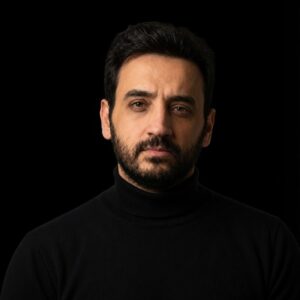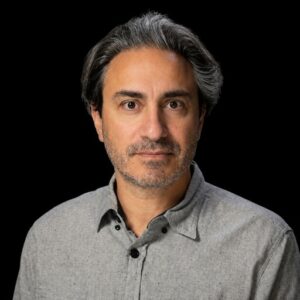
Sharon Liese was driving through suburban Kansas City, listening to NPR, when she heard that police had raided the Marion County Record, a newspaper in a town of fewer than 2,000 people, about two hours away. The next day the paper’s 98-year-old co-owner, Joan Meyer, died, her doctor citing the stress of the raid. On the surveillance footage, Joan Meyer, a journalist for sixty years, can be seen confronting the officers in her own living room, refusing to be cowed. Liese’s documentary Seized, which premiered at the 2026 Sundance Film Festival, takes its name from the paper’s own defiant post-raid headline: “Seized, but not silenced.”
We had to trust each other because he had to trust the story in my hands.
The Inversion in the Title
Here’s the stance worth drawing out, because the title cuts two ways and the whole film lives in the hinge between them. In the event itself, a small paper’s story, its reporting, its phones and computers, was treated as evidence and carried off, the precise thing the First and Fourth Amendments exist to forbid, an act that drew condemnation from press organizations around the world. Liese’s film performs the inverse alchemy. She builds the entire documentary out of evidence, a ten-camera weave of police body-cam and household surveillance footage, plus courtroom records, and turns it back into story. The raid tried to seize the story and make it evidence; the film seizes the evidence and makes it story. That is not a tidy symmetry. It is an argument about what a documentary is for: to hand the public back the very capacity the raid tried to confiscate, the right to see for itself.
Why She Drove
Access, she says, is everything, and proximity was her unlikely advantage. Because every device at the paper had been seized, no filmmaker could reach the Meyers by phone or email; you had to physically show up. Liese could, so she did, waiting in a line of journalists to catch the publisher, Eric Meyer, between interviews and talking through what a film might be. Meyer, a tried-and-true newspaperman, told her that since she got there first, she got the scoop. They worked without any formal agreement for six months, and she had to gently explain to a journalist who wanted everyone to tell his story what exclusivity means to a filmmaker trying to build something that can survive. The raid’s ostensible trigger was small and strange: the paper had verified a tip about a local restaurant owner’s old drunk-driving record and planned to report it, and a warrant alleging identity theft followed, signed, it later emerged, by a judge who had not read it.
The Harder Trust
The trust that took real time was the town’s. For a year, people stopped her on the street to insist there was another side she hadn’t heard, then refused to go on camera, afraid of seeing their names in the very paper at the center of it all.
Slowly, through her producer’s patient relationship with the mayor, the other side opened up, and the film widened from a press-freedom case into a panoramic portrait of a small town where tensions had simmered for years before any warrant was signed. Her editor, Derek Boonstra, threaded the body-cam, the surveillance, the courtroom footage, and the interviews into a one-year unfolding; one of the most important interviews, with an officer involved in the raid, arrived only after the film had already been submitted to Sundance, and the commitment to hearing everyone meant going back in to weave it through. The both-sides instinct even builds toward a tense joint interview between two people at open odds. This is where Liese refuses the easy version. The constitutional violation is real and, in the end, documented in court; the police chief resigned and was charged, a judge was removed for signing a warrant she never read, and the litigation that followed ended in a multimillion-dollar settlement. Reviewers noted that the film does have villains; it is simply patient enough to let them incriminate themselves on their own footage rather than flattening anyone into caricature. But Liese keeps insisting that everyone in the frame believes in the Constitution, and asks the harder question of whether we only mean it when it serves us. Her clearest touchstone is the journalism classic she rewatched while cutting, Alan J. Pakula’s All the President’s Men, whose star, Robert Redford, founded the festival where Seized premiered and died the year it did.
Permission to Laugh
Tone is how she keeps the film from becoming its own kind of lecture.
We gave people permission to laugh, and not to laugh at the people, but to laugh at the situations people were in.
She opens on bison set to Pete Seeger’s “Newspaper Man,” a signal that absurdity is allowed without the stakes ever dropping away. She tested and then abandoned a Big Short-style device of characters explaining the law straight to camera, because making people recite the First Amendment exactly right would have broken the documentary’s authenticity. Instead she trusts a newcomer, a young reporter from New York who arrives a year after the raid to take a job at the besieged paper, to be the audience’s surrogate, asking the questions we would and learning the story as we do; viewers told her afterward that they had watched the whole thing through his eyes. A film that simply told you what to think would be its own small seizure. The yes itself arrived as a text from a Sundance programmer while she was on a Zoom with her editor; she held the phone up to the screen, then called back shaking, and they both wound up in tears.
Letting You Witness
Liese came to filmmaking late, by way of marketing and emotional brand storytelling, and built a body of patient, longitudinal documentaries, the Emmy-winning Flagmakers, the HBO film Transhood, a four-year study of teenage girls, work the publisher praised for telling untold stories regardless of whether liberals or conservatives would like them. She calls Marion a canary-in-a-coal-mine story, a small place where something national and frightening showed up early. Her instinct, honed across all of it, is that the truth of an event lives in time and in people, not in a headline. The business side remains unresolved, the documentary market brutal enough that a high-profile backer who had circled the film withdrew the very day she learned she had gotten into Sundance, which, she decided, was support enough. Seized belongs beside two documentaries she doesn’t name: Errol Morris’s The Thin Blue Line, which turned the re-examination of evidence into gripping inquiry, and Brother’s Keeper, that portrait of a wary rural community thrust into a legal spotlight. Her advice to younger filmmakers is plain: put in the hours, earn trust slowly, and just keep showing up, because everyone has a story. There was a quiet poetry to the launch, too: it was the last Sundance held in Park City, and the first since Redford’s passing, an ending handed forward to a new beginning. The footage the state seized as evidence, she gives back to us as story, and in doing so does exactly what the newspaper was doing when the police arrived: not telling us what to think, but letting us witness, and decide for ourselves.