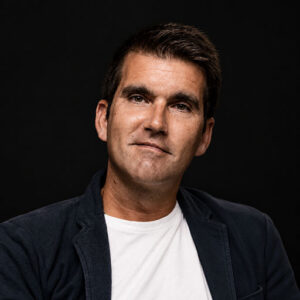
Subhadra Mahajan grew up in the small Himalayan state of Himachal Pradesh on a diet of Hollywood classics, The Sound of Music and Disney fairy tales on VHS, and she’s the first to laugh that you’d never guess it from her work. Her debut feature, Second Chance, world premiered in the Proxima competition at Karlovy Vary, played its Asian bow at Busan, and reached Los Angeles at AFI Fest, a quiet black-and-white film about healing that could hardly be further from Mary Poppins. Before directing, Mahajan spent years alongside filmmaker Pan Nalin, co-writing Angry Indian Goddesses and working on Last Film Show, India’s 2023 Oscar entry. Nalin serves as executive producer here.
A Story About How We Mend
Second Chance follows Nia, a twenty-five-year-old played by first-time actress Dheera Johnson, who retreats from the city to her family’s summer home in the Pir Panjal mountains in the dead of winter, carrying the first real trauma of her life, an unplanned pregnancy and a heartbreak she’s facing largely alone. What she finds there isn’t a solution but a slowing-down: time, snow, silence, and an unlikely bond with the caretaker’s family, the seventy-year-old Bhemi and her eight-year-old grandson Sunny. The film is inspired heavily by Mahajan’s own life, and she’s clear about why she needed to tell it.
We don’t really know how it works, but it works.
That’s her view of healing, and it’s the engine of the whole film. She wanted to make something about how a young person survives a tragedy that feels permanent, about our frayed relationship with a natural world that operates far beyond human control, and about unlikely friendship in a divided, isolated age. Against a content economy Marcus calls junk food, all frantic stimulation and no nourishment, Second Chance is built like the opposite: unhurried, observed, attentive. The slowness isn’t a budget limitation. It’s the argument.
Mahajan has always been drawn to the unexpected turn. As a child she staged a backwards Cinderella in which the wicked stepmother was the one who actually needed rescuing, an anti-heroine before the term was fashionable, and she still believes the only way past creative paralysis is to learn the rules well enough to break them in the right way. Her black-and-white debut is precisely that sort of calculated rule-break.
Black-and-White as an Ethic of Attention
The film was monochrome from its very inception, never a film in color, and Mahajan’s reasons stack up into something close to a philosophy. Nia’s arc is finding light at the end of a long dark tunnel, and an Eastern sense that light and dark coexist rather than oppose maps naturally onto the yin and yang of a Himalayan winter, white snow peaks against the dark bare branches of apple trees, blue skies that read almost black. But the deeper reason is ethical. Everyone who comes to the Himalayas, she notes, shoots it in saturated color, and the local indigenous people dress vividly; in color, she feared, the film would slide into a National Geographic travelogue, turning her neighbors into specimens of a culture rather than people with interior lives. Stripping the color is a way of stripping the exotic, leaving only the structure of feeling. As she puts it, the contrast pulls your eye to the shapes and the design within the frame, the way a strong story works on a simple, powerful spectrum.
She shot on a small RED Komodo with a documentary sensibility and natural light, the kind of pared-down approach she traces to two very different inspirations. The first is the Iranian New Wave.
The poetic neorealism of Abbas Kiarostami’s Where Is the Friend’s Home? and Majid Majidi’s Children of Heaven showed her, when she first encountered world cinema in a college film club, an approach built on non-actors, open-air shooting, natural light, and open endings that refuse to hide the darkness. The second is Andrea Arnold.
What Fish Tank Taught Her
When Marcus raised Andrea Arnold, Mahajan lit up. Arnold, she argues, deserves to be a household name, and Fish Tank is the model she points to.
Arnold’s 2009 Cannes Jury Prize winner follows Mia, a volatile fifteen-year-old in an Essex housing estate, the kind of young woman who does the wrong thing and earns your empathy anyway, and Mahajan admires how Arnold keeps such an internal story always moving. There’s a hidden rhyme in the casting, too: Arnold famously found Katie Jarvis, her untrained lead, arguing on a train platform, and Mahajan found Dheera Johnson on a YouTube travelogue, magnetic simply being herself. Both films hand a feature to a newcomer and trust her to carry it. The lineage extends to films Mahajan didn’t name but clearly belongs beside, Paweł Pawlikowski’s Ida, where a young woman’s austere spiritual journey is rendered in luminous black and white, and Lunana: A Yak in the Classroom, where a restless city dweller finds healing in a remote Himalayan village.
The Medicine Is in the Making
Here’s the stance the film quietly earns: its form is its medicine, and the production proves it. Mahajan cast three non-actors, including a lead with no on-camera experience, an illiterate seventy-year-old, and a child, which meant she had to shoot almost entirely in chronological order so they could simply live the story rather than decode a script. That decision has a beautiful consequence. The bond we watch form between Nia, Bhemi, and Sunny is, at some level, a bond that actually formed, on a freezing mountain over thirty-five grueling days, at altitudes near ten thousand feet and temperatures of twenty below. The healing the movie depicts is the healing its own making administered. A ten-day COVID shutdown, which terrified her at the time, only gave the connections more room to deepen. With a crew of twelve and a shoestring budget cobbled from savings, she learned that directing is maybe half craft and half crisis management, that the hard part is rarely the framing but the people.
Festivals, and What They’re For
That a film this small reached Karlovy Vary, Busan, and AFI says something Mahajan clearly treasures, and the episode becomes a tour of festival culture. Karlovy Vary she describes as the right size, big but intimate, driven by pure passion for cinema, with audiences who are plumbers and office workers making an annual pilgrimage just to watch films, and who gave Second Chance a standing ovation that left strangers in tears. She and Marcus trade notes on the Los Angeles landscape, where AFI now stands as the city’s biggest festival, and lament how easily a culture defaults to fast food when the community and curation that once sustained moviegoing erode. Her advice to her younger self ties it all together, the same instinct that drives her filmmaking: don’t rush to make a film before you’ve lived enough life to have something to say.
Don’t look at your phone so much. Just look around you more.
That, she insists, is where characters and stories actually come from, in the looking and the listening, on a train or a bus or a snowbound mountainside. It’s the whole ethos of Second Chance in a sentence: attention itself, paid slowly and without flinching, is the thing that heals.