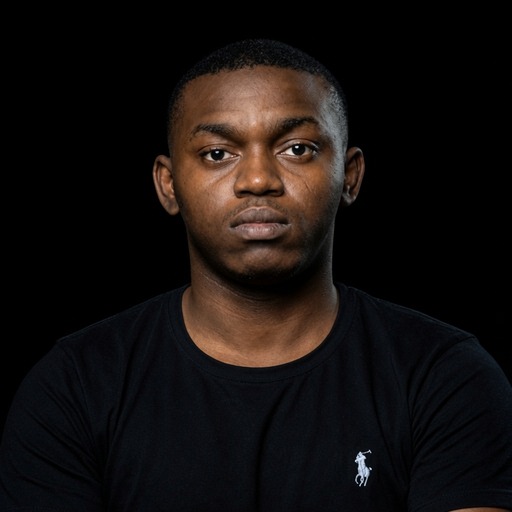
Afolabi Olalekan made his feature debut with Freedom Way, a Lagos-set thriller that world premiered in the Discovery programme at the Toronto International Film Festival, and the title cuts two ways at once. In the film it nods to a grim real-life campaign Olalekan describes, hospitals demanding a police report before treating a gunshot victim, treat first and ask questions later inverted into something lethal. Off screen it doubles as a production motto, because almost nothing about making this movie went according to plan.
A Startup, a Ban, and Nine Colliding Lives
Written and produced by Olalekan’s longtime collaborator Blessing Uzzi, who first drafted it as a short before realizing the material was too big to compress, Freedom Way follows the ripple effects when two software developers launch EasyGo, a ride-share app connecting Lagos’s commercial motorcyclists, the Okada riders. Riding high on investment and government assurances, the founders, among them Themba, played by South African actor Jesse Suntele, run straight into the wall every Nigerian youth knows: the police. Routine extortion turns out to be the least of it once a sweeping government ban on the service detonates the livelihoods downstream, including that of Abiola, a doting motorcyclist father played by Adebowale Adedayo, better known in Nigeria as the comedian Mr. Macaroni, and a doctor forced to choose between his conscience and an outdated policy. The structure threads nine interconnected lives toward a collision.
That structure came directly from a film Uzzi loved and Olalekan revisited at her urging.
Why Crash Was the Blueprint
When Marcus asked what inspired the film, Olalekan pointed to Paul Haggis’s 2004 ensemble drama Crash.
What drew them wasn’t just the device of interlocking strangers; it was what that device says about a society. Relating it back to Nigeria, Olalekan explains, everything affects everybody: no matter your class, age, or wealth, whatever hits the poor eventually reaches the middle class and the rich, one way or another. The interconnection isn’t a clever conceit, then, but a thesis, that there is no safe distance from a corrupt system. There’s a neat symmetry the filmmakers appreciated, too: Crash also premiered at TIFF, which felt like a good omen. The deeper kinship runs to films Olalekan didn’t cite but plainly belongs beside, the kinetic, system-grinding sprawl of Fernando Meirelles’s City of God and the patient fury of Ken Loach’s I, Daniel Blake, where bureaucracy itself is the antagonist crushing ordinary people.
Here’s the stance the film earns: its real subject isn’t a single act of police brutality but corruption as a total climate, weather that touches the founder, the rider, the doctor, and, as it turned out, the director. Olalekan was arrested days after the shoot wrapped, bundled into a van at 8pm along with five or six other random young people and made to pay a bribe to walk free. The first harassment scene in the film had already happened to Uzzi in real life; Suntele had a near-identical encounter while filming. The movie isn’t reporting on a reality it observed from outside. It was made inside that reality.
Recasting Half a Movie
The production became its own act of refinement under fire. After roughly 25 days of shooting, Olalekan and Uzzi realized the film simply didn’t feel like the film they’d read on the page, so they did something drastic: they recast two of the leads plus a couple of supporting roles and went back to reshoot a large share of the movie, finishing the second pass in about 15 days.
I think the pressure sometimes is good.
The reshoot didn’t just fix performances; it changed his whole approach. The first time, his camera moved constantly. The second time, with even less time to set up, he discovered that holding the camera static was often better for the emotion, and faster besides. The constraint taught the craft. He leaned into deliberate contrasts, a colour palette and production design that start bright and saturated and are stripped progressively darker as the story descends, wardrobe shifting from vivid to muted, and a single repeated framing for Abiola that first shows a Bible in the shot and later, as he hardens, swaps in money. Roughly a fifth of the film exists in single takes, scenes grabbed in a location they had permission to use for only an hour. Adding a South African founder to the mix in the reshoot, Olalekan notes, gave the partnership an extra charge.
None of it would have happened without Uzzi holding the money together by sheer will. One actor withdrew on the very day he was meant to start, worried that appearing in the film might jeopardize his future political ambitions, a small but telling casualty of exactly the fear the movie is about. Backers who’d promised funds melted away once cameras rolled, so she raised cash day by day while the crew shot, telling Olalekan each morning not to worry, she’d figure it out. He never knew, filming, whether there’d be money to roll tomorrow. They kept their heads down and kept going, and the film was still seeking distribution when it reached Toronto, the producer hunting streaming and sales opportunities even as post-production ran to the wire. The scarcity that nearly broke the production is the same scarcity the film depicts, which is why the run-and-gun method doesn’t merely survive the constraint, it metabolizes it into authenticity.
Cinema as One Voice Among Millions
Olalekan is clear-eyed about what a film like this can and can’t do. He has no illusion that one movie changes a government overnight.
This is just one voice out of a thousand voices, millions of voices in fact.
The point, he argues, is awareness and accumulation: every filmmaker across Nigeria’s thirty-six states adding a voice, a seed planted on a stage as large as TIFF that you can’t predict the eventual size of. That mission also explains his sense of his own lane. Nollywood, the world’s second-largest film industry by output, leans heavily on comedy because, as he sees it, Nigerians use film and Afrobeats to escape a chaotic reality. Olalekan wants to make the films you return to once the escaping is done, the ones that stay inside reality and force a reckoning with it. His desert-island favorites point the same direction: Beasts of No Nation, The Boy Who Harnessed the Wind, and Queen of Katwe, stories of young people entering a hard new world and adapting to survive it.
His own entry into film was a child’s curiosity. At six or seven he watched a music-video crew rent out his family’s compound and rig up a green screen, and he badgered the director about why anyone would use such an ugly colour. Months later he saw the finished video on television, the green gone, the performers floating in midair, and the mystery of how that trick was done never quite let him go. He’s chased that same curiosity through music videos, commercials, and content ever since, and films, being the largest canvas of all, now hold the most of it. His advice to his younger self fits the whole ethic of a man who reshot half a film rather than release a lesser one, and who keeps a Nigerian proverb close, that only the thing you struggled for will last: stop hiding the work you think is too rough, because the rough work is the proof of growth. As he puts it, that is not stupid. Just put it out.