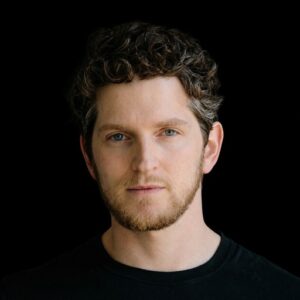
Carissa, the feature debut of South African writer-director duo Jason Jacobs and Devon Delmar, premiered in the Horizons strand at Venice and earned a Best Film nomination, capping a development that began back in 2017. The film grew out of a place before it grew out of a plot. Delmar started visiting Wupperthal, a small village in the Cederberg mountains where rooibos tea is the lifeblood, learning to harvest the crop and making friends, long before there was a story. The producer Deidré Jantjies, who first met Delmar at a 2018 panel on indigenous representation, was the one who paired him with Jacobs, a Namaqua theatre maker, movement director, and published poet, and the partnership became the engine of everything that followed.
A Choice With No Clean Answer
The setup is deceptively simple. In a quiet village, a young woman named Carissa, played by Gretchen Ramsden, is pushed by her grandmother to apply for a job on a luxury golf estate, Mont Royale, that a multinational plans to build in the mountains. Then she learns the estate would pave over the rooibos farm of her estranged grandfather, Hendrik, and the easy opportunity becomes an impossible fork: leave for the city and a supposedly better life, or stay and inherit a way of living that’s about to be bulldozed. When she gets into trouble and her grandmother drives her out of the house, she takes refuge in the mountains with the grandfather she barely knows.
Here’s the move that makes the film quietly sophisticated. Jacobs and Delmar refuse to turn Carissa into an eco-warrior. An earlier draft had her more actively crusading, little guy against the big guy, and the labs and readers never responded to it. So they stripped it back to a young woman simply trying to figure out who she is, and that human scale is precisely what lets the macro forces land. Carissa isn’t an activist; she’s caught between her grandmother’s pragmatism and her grandfather’s land, and by keeping the camera at the level of one family, the film lets capital, ecological collapse, and what Jacobs calls a lingering colonial hangover register the way they actually do in a life: not as a cause to enlist in, but as weather pressing down on people who never asked for it. It puts Carissa in quiet conversation with Lemohang Jeremiah Mosese’s This Is Not a Burial, It’s a Resurrection, another Southern African film where development threatens ancestral land and an elder refuses to surrender it.
Magical Realism as the Bridge
Delmar lectures in magical realism and what he calls the cinema of the non-human at the University of Cape Town, and that frame is how the film carries planetary stakes without lecturing. When Marcus raised Beasts of the Southern Wild, both directors lit up.
Benh Zeitlin’s 2012 film wasn’t a template they set out to copy, but they deeply admired one thing in particular: how it made an environmental crisis tangible by turning the slow violence of ecological degradation into something a child could see, the aurochs thawing out of the ice and thundering toward Hushpuppy. How do you put a catastrophe that unfolds over centuries into a single character’s story? You give it a body. For Carissa, the catastrophe wears the guise of a capitalist venture, the golf estate, and the collapse of an ecosystem rhymes with the collapse inside a family. Magical realism is the bridge that lets a film at the scale of one village and one slipper-wielding grandmother hold all of that at once.
We go to the more than human to find perspectives.
That instinct, reaching past the human toward animals, mountains, plants, and in Carissa the wind itself, which Jacobs describes as a life force that gives and takes, places the film alongside Ciro Guerra’s Embrace of the Serpent, where indigenous knowledge and the non-human world refuse the logic of extraction. It’s a worldview, not a decoration.
Casting the Village to Play Itself
The film’s deepest ethical move is also its production method. With a budget they decline to name, partly because naming it would change how people see the film, the directors leaned into constraint and cast almost entirely from the Wupperthal community. Wilhelmiena Hesselman, who plays the formidable grandmother, had never really acted; she was shot in her own house, in her own clothes, speaking in her own manner, drawing as much from her life as from the script. Jacobs and Delmar even rewrote the screenplay to fit the people they’d cast and the lives they actually lived. When Jacobs worried whether Hesselman could reach the ferocity of the scene where she chases Carissa out and beats her with a slipper, the local actor Edgar Valentyn, who plays the estate’s representative and had known her his whole life, reassured him she’d have no trouble finding that energy.
Ramsden, the one trained lead, anchors all of it; the directors describe her as so completely absorbed on set that Delmar now finds the finished film almost hard to watch, so much does her performance stir up for him. Casting itself ran on instinct rather than audition logic. Given only two days to fill one pivotal role, they trusted a gut certainty that a particular woman simply was the person, and that conviction, Jacobs says, blossomed on screen.
That collaboration turns representation into something other than extraction. The film is made with the community rather than about it, so its method enacts the very respect for land and people that its story is pleading for. The same goes for the editing, Delmar’s first feature cut, which he and Jacobs essentially co-directed in the room, bringing in the veteran South African editor Richard Starkey to crack the propulsive dance sequence neither of them could quite assemble.
The Question They Keep Asking
Running underneath all of it is the cultural-sensitivity question the episode’s title names, and the filmmakers don’t pretend to have solved it. When Marcus asked for advice on a documentary he’s making about the Tuscarora people of North Carolina, both directors resisted dispensing wisdom, offering instead the practice they live by: keep the uncomfortable conversation in the open, where it can be interrogated, and never shy from the most basic interrogation of all.
Who are you and why are you here?
Everyone should be asking that, Delmar says, even of an autobiographical film. Jacobs adds the other half: for too many generations, indigenous and Black and Brown communities were denied platforms this size, so a story told when you are genuinely called to it, when you understand its sensitivities and have some blessing to carry it, can be a process that’s respected and needed rather than presumptuous. Their stated measure of success isn’t a festival prize but something smaller and harder. They want the people of Wupperthal to watch Carissa and recognize themselves, and they want a grandmother’s verdict most of all, because hers, Jacobs says, is the only review honest enough to trust. Even the choice to shoot in a boxy 4:3 frame serves that aim: they were warned it would cost them commercially, and they did it anyway, because the intimate ratio keeps you close to faces and refuses the wide, consuming gaze of a development brochure. Carissa is short on easy answers by design, and that, finally, is the point.