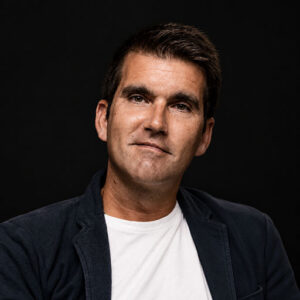
After Party, Vojtěch Strakatý’s feature debut, premiered in the Orizzonti Extra section at Venice, and almost everything about it, the story, the schedule, the gear, the years of waiting, started as a constraint the director chose to lean into rather than fight. The film comes straight from his own life: about a decade ago his father ran up serious debt and the family lost their home. Strakatý took that wound and, refusing to make a one-to-one autobiography or a revenge piece, built a fiction around it.
A Day That Doesn’t Let Up
The film unfolds across a single sun-drenched day in the satellite suburbs of Prague. Carefree 23-year-old Jindřiška, played by Eliška Bašusová, comes home from a party to find bailiffs packing up the house and debt collectors hunting her father, and in those few hours she has to decide whether to try to save him or save herself. Her best friend, played by Anna Tomanová, is the only person in her corner. The title points two ways at once. Literally, the film opens and closes on mornings after parties. Thematically, it names a whole generational hangover: in the Czech Republic of the 1990s, after the revolution, business boomed and a certain optimism took hold, and that party quietly ended in the 2000s, except the older generation kept behaving as though it hadn’t.
Here’s the stance the film earns. Strakatý refuses to make the father an easy villain, and that refusal is the point, because it lets the film indict something larger than one man. Jindřiška doesn’t inherit a bad person; she inherits a worldview, the boomer-era faith that the debt-fueled good times could last forever and that business could still be done the old way. There’s a moment where the father tells her to drop her “loser mentality” while she’s the one giving sober advice, asking why they’d sink more money chasing debts they can’t outrun, and it crystallizes the whole intergenerational handoff. By trapping her inside one inescapable day, Strakatý makes the inheritance feel structural, already decided before she woke up, and economic precarity register less as melodrama than as weather the young now simply live inside. It’s the same dread that drives the Dardenne brothers’ Rosetta, where a young woman fights in near-real-time just to stay afloat, and Ramin Bahrani’s 99 Homes, where the machinery of eviction becomes the monster.
How COVID Saved the Script
The development is a case study in leveraging limits. Strakatý’s script won the Czech Film Foundation’s Star of Tomorrow award back in 2018, but for years the story carried a strange extra layer: it was set in a dystopian 2030 Czech Republic where people couldn’t breathe without air masks. Then the pandemic arrived and made dystopia redundant.
Is this the film I want to be watching as a viewer?
That’s the question he keeps returning to, and the answer kept pushing him to strip away. You can never keep up with the horrors of the real world, he realized, so why invent a future when the present is already accelerating past you. He cut the dystopia entirely and returned the film to a simple, realistic present, shooting in 2022 after two years of pandemic delay. The struggle, he says, turned out to be the blessing; the forced patience let him refine the story down to its essentials.
He’s wary of the opposite danger too, the overcooked development. Looking back through his many drafts, he can see ten other films he might have made, and he’s clear that endless tinkering can hurt a project as badly as rushing it. His safeguard is the deadline.
It liberates me when I know that I have the deadline and the time limit.
External limits, the funding date, the shoot date, the locked edit, are what free him to commit, and it’s why he frames the one-day structure as a gift rather than a restriction: you don’t need the whole world to paint on, just a clearly defined canvas.
Two Lenses, Fourteen Days
The production pushed the same philosophy to its limit. After Party was shot in just fourteen days with two lenses, often grabbing crucial scenes in a single take simply because there was no time to reset the camera, and Strakatý insists that working that way yields more than the gear-heavy alternative, not less. Too much equipment, he argues, makes you lazy; one lens and one light forces you to get creative about how to pull a scene off. He’s not a purist about it, he happily leans on tools like reliable autofocus that let one operator do what used to take three, but the principle holds: identify exactly what you need, and let the constraint do some of the directing. It’s a survival skill he learned partly as an outsider who never broke in through prestige festival shorts and spent years working off the radar, telling himself he’d make films his own way no matter how long it took.
Strakatý treats the craft as physical labor as much as art, quoting Paul Verhoeven’s line that a filmmaker has to be fit, because the writing, the shoot, and the long months of post all demand a stamina you can’t fake. It’s part of why he’s already pushing several projects forward at once rather than waiting around: time, he’s learned, is the one limit you genuinely can’t negotiate. And whatever the budget or schedule allows, his measure of a finished scene is simple, that a viewer should sense every shot was cared for, that nothing was filmed merely to move a character from one door to the next.
The Mundane Turned Menacing
For the film behind the film, Strakatý points to the Brazilian director Kleber Mendonça Filho, and especially Aquarius.
Mendonça Filho’s 2016 film stars Sônia Braga as Clara, the last resident of a seaside Recife apartment building who refuses to sell to the developers circling her home, and it wages its conflict as a slow, creeping dread rather than open war. Strakatý calls it the closer cousin to his own film, the portrait of a woman whose ordinary daily life is gradually invaded by an impersonal power that wants her out. The foundational inspiration, though, was Mendonça Filho’s earlier Neighbouring Sounds, which Strakatý first saw around 2012 and instantly loved because it was the thing he’d always wanted to do: an arthouse film, slow and stylized and full of mundane detail, that turns quietly, almost imperceptibly menacing, where seemingly normal figures drift toward something threatening and the tension never quite resolves into action. That anti-climactic restraint, aware of itself, is exactly the register After Party works in, the executors and the debt looming like ambient threat rather than spectacle.
Strakatý works for the Karlovy Vary festival’s industry arm, which has given him a clear-eyed read on how films actually travel, that selection is never an exact science, that a film you’d swear is a perfect fit gets passed over while another surprises everyone. So when his producer called, he assumed it was another rejection, until the question came: are you sitting down. He’s already finished a second feature, a mystery-tinged summer film, and is developing four more plus a series, all built on the same conviction that runs through After Party: you make the film you’d want to watch, you embrace what you can’t control, and the limits, far from holding you back, are what make the thing worth caring about.