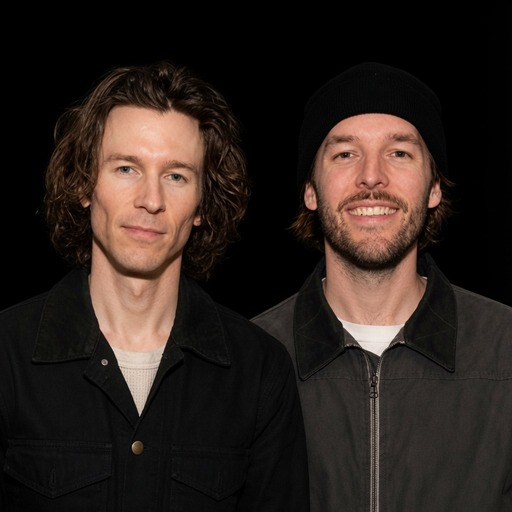
Daniel and Austin Straub’s Out of Plain Sight won the Audience Choice Award at the Santa Barbara International Film Festival, after a world premiere at DOC NYC and ahead of opening the first Los Angeles edition of Slamdance. It is, among other things, one of the most beautiful documentaries in recent memory to be made about something genuinely horrifying.
I think we should be examining things that we are doing that we won’t easily be able to take back.
A Disaster Hiding Off the Coast
The film, an L.A. Times Studios production directed by Daniel Straub with Pulitzer-finalist Times reporter Rosanna Xia and shot by Daniel’s Emmy-winning brother Austin, traces a catastrophe almost no one in Los Angeles knew about. In the years after World War II, as many as half a million barrels of DDT waste were quietly dumped into the ocean roughly a dozen miles off the coast, between the city and Catalina. Decades later, a UC Santa Barbara scientist found a corroded barrel on the seafloor, called Xia, and the two of them began connecting the dots between sick sea lions, a poisoned ecosystem, and a legacy of human exposure that one scientist in the film says will be measured not in decades but in centuries. DDT does not break down; it bioaccumulates, climbing the food chain and re-concentrating in the bodies of the wildlife, and more than fifty years after production stopped, California condor eggs still show its telltale thinning, a detail straight out of Rachel Carson. The Straubs first read Xia’s reporting, couldn’t shake it, and eventually approached her; she had already been pitched by more than a dozen other filmmakers, but they convinced her the story belonged on screen, even though, as they admitted, the science was still unfolding and they did not yet know what shape the film would take.
The Real Pollutant Is Forgetting
The film opens, fittingly, with a line from Carson’s Silent Spring about the obligation to endure giving us the right to know, and that principle is its foundation: we are here, certain things have been done to the world we live in, and we deserve to know what they are. Here’s the stance worth drawing out, and the film keeps circling it. The dumping was never a secret. The archival footage the Straubs unearthed isn’t an exposé of a crime caught on camera; it’s cheerful industrial how-to material, tutorials on the proper way to dispose of this kind of waste. It was legal. It was known. The accepted wisdom of the era was captured in a chillingly tidy slogan: dilution is the solution to pollution, the belief that an ocean large enough would simply swallow anything. So the deeper horror here isn’t a cover-up, the satisfying genre where villains conceal and journalists expose. It’s something worse: a society that knew exactly what it was doing, decided the sea would absorb it, and then moved on and forgot. As Xia asks in the film, was this a secret chapter of history, or did we just forget about it? The Straubs side firmly with forgetting, which is why one of their scientists offers the line that could be the whole movie in miniature: nature has a better memory than we do. The chemicals remember, in the bodies of the sea lions, long after we chose to look away.
Why the Ending Stays Messy
That diagnosis dictates the film’s most deliberate choice: it refuses a tidy ending. The Straubs wrestled with this, and a documentarian friend whose own film carried a messy ending convinced them that an unresolved finish is a feature, not a bug, because it sits with people longer. A bow-tied resolution would let an audience do exactly what the previous generation did, file the problem away as solved and forget it all over again. So the messy ending isn’t a storytelling failure they made peace with; it’s the film’s entire ethical strategy, a refusal to grant the closure that releases you from responsibility. The proof is anecdotal but telling: strangers keep stopping the brothers on State Street to say they saw the film the night before and simply cannot stop thinking about it.
Beauty as the Argument
This is where their lodestar comes in.
The brothers cite Alex Garland’s Annihilation as their tonal North Star, and Daniel is candid about why.
Alex Garland has this way in his films of displaying these psychologically distressing concepts, but still it is often beautiful.
Their opening shot is pure Garland: a serene stretch of seafloor with one thing horribly out of place, a single barrel. But the borrowing runs deeper than tone. Garland’s trick of hiding one wrong thing inside a beautiful, ordinary world is precisely the epistemology of slow environmental violence. The harm doesn’t announce itself with horror-movie ugliness; it lurks inside the gorgeous, beloved California coast that everyone drives past and photographs, which is exactly why it stays out of mind. So the film’s beauty isn’t decoration or even consolation. By making the poisoned ocean ravishing, the Straubs reproduce in the viewer the very seduction that allowed the dumping to be forgotten, and then they make you look at the barrel. The film belongs in conversation with two works the brothers don’t name: Edward Burtynsky and Jennifer Baichwal’s Manufactured Landscapes, which finds an unbearable sublimity in industrial ruin, and Todd Haynes’s Dark Waters, the closest narrative cousin to this tale of a forever chemical hidden in plain sight.
A Cinematic Documentary
Part of why the film looks the way it does is a conviction the brothers share about where documentary is heading. As camera technology has grown more sensitive and more cinematic, the old wall between fiction and nonfiction has begun to dissolve, and the Straubs are openly thrilled by the wave of hybrid, docu-fiction, and what one filmmaker called auto-fiction work crashing the two forms together. Their own instinct runs the other way, toward bringing real images to a fictional level of beauty, but the underlying belief is the same: good filmmaking is meant to make you feel something, not merely deliver information.
Brothers From Rocky Mount
The Straubs grew up in Rocky Mount, North Carolina, with no film industry anywhere near them, making stop-motion shorts on a toy camera that came packaged with a Lego set. The moment they understood filmmaking could be a job arrived while watching the behind-the-scenes documentary on the Indiana Jones box set, specifically the crew tossing shovelfuls of dirt to fake a tank grinding against a wall. They moved west after high school, lived cheap in the high desert, and clawed into low-budget documentary work, where they found the form intoxicating: you show up, things happen, and you figure out in real time where the audience needs to be. What keeps them going through the grind, they say, is the people now devoting their lives to studying and remediating this mess, the scientists and journalists trying to leave the world a little better. They are unabashedly grateful, too, for the festival ecosystem carrying the film, and they single out one detail from Slamdance with real admiration: the festival required them to burn the subtitles directly into the print for accessibility, an extra cost that, on reflection, struck them as exactly the kind of thing a festival should insist on. Their advice to a younger filmmaker is disarmingly simple, the same instinct that built their whole sensibility: watch more movies.