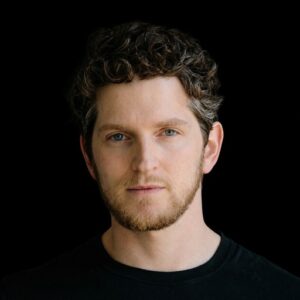
Colombian writer-director Gala del Sol brought her debut feature Rains Over Babel to the NEXT competition at the 2025 Sundance Film Festival, then on to the Bright Future section at Rotterdam, and the most striking thing about it is that she didn’t entirely invent it through conscious effort. She dreamed much of it into being.
That film you’re doing is a reflection of who you were at the moment.
A Nightclub at the Edge of the Afterlife
Rains Over Babel reimagines del Sol’s home city of Cali as a mythical, retro-futuristic place where a legendary dive bar called Babel doubles as purgatory. Presiding over it is La Flaca, a flamboyant personification of Death who lets souls gamble years of their lives against her, while a sprawling, gender-fluid ensemble of misfits drifts through a tropical-punk twist on Dante’s Inferno. Del Sol describes her own sensibility as fantastic realism with a punk aesthetic and a tropical twist, and she’s quick to say that isn’t a brand she manufactured but simply who she is, a kid raised on the everyday magical realism of Colombia, on fantasy, on a little teenage punk rebellion. Her advice to younger filmmakers chasing a signature is to stop chasing: your style is just the sum of what you love. Made by a team of twenty-somethings who asked themselves a single question, what’s the movie we’d most love to watch, the film wears its love of world-building, fantasy, and camp completely without apology.
The Film Came From a Lockdown and a Dream
The origin story is pure 2020. Del Sol flew home to Colombia on one of the last planes before the borders closed, watched her planned first feature collapse, and spent twenty days locked in a room not knowing if she had COVID. Out of that existential freefall, she gathered a group of theater actors over weekly video calls, ostensibly to teach them screen acting, and gave them an exercise: invent a character you’ve always wanted to play, and a character that would heal something inside you. Nobody knew it was becoming a movie. The cast was almost entirely between twenty and twenty-five, confronting mortality for the first time, which is why Death herself walks through the story as the figure who connects them all. Each role grew out of the actor playing it, a wound they genuinely wanted to heal, which lends the fantastical world a raw, autobiographical charge underneath all the spectacle.
Then the dreams started. Night after night, del Sol dreamed the world of Babel, its devil-bartender and its guardian angel leading her through a version of her city in another dimension, even showing her Babel as a pyramid, which became the film’s upside-down-pyramid structure of many stories converging over twenty-four hours. She keeps a notebook under her pillow she calls the “mental vomit” book, scribbling the images and phrases her mind throws up as she falls asleep, which she swears is the cure for writer’s block.
The Subconscious as Co-Author
Here’s the stance worth drawing out, because del Sol almost says it outright: she let her subconscious write the film, then spent months figuring out what it had told her. Partway through, an exorcist priest mentioned to her that guilt is what traps people in the material world, the belief that we don’t deserve forgiveness, and only later did she realize she’d quietly built that exact idea into Babel, where every wildly different character is bound to the others by some private guilt. Most directors decide what a film means and then construct a world to express it. Del Sol built a world out of dream-images and let it tell her what she was afraid of. Her method is closer to transcription and arrangement than invention, which is also why the pandemic matters beyond biography: the film is a collective subconscious, a whole generation’s first reckoning with death, refracted through characters each actor built from a real wound. And making purgatory a sweaty, neon nightclub rather than a grey void is the thesis in miniature, her refusal of the idea that grappling with death and guilt has to be solemn. Why can’t the afterlife hold humor, heartache, salsa, drag, and dancing? You can stare down mortality and still throw a party.
Building Its Own Reality
That conviction shapes every craft choice, starting with sound, which del Sol treats as a character in itself.
Sound doesn’t and shouldn’t match reality, but it should create its own reality.
For a Colombia of another dimension, she and her team asked what the birds there would even sound like, then mixed it all at Sony Pictures Studios in Los Angeles, a dream slot they could afford partly because the industry strikes had freed up the stage. Her composer was asked to invent a whole genre by fusing salsa, flamenco, Balkan music, and trap. Much of the film’s lavish production value comes not from built sets but from real, iconic Cali places: Babel is two beloved local bars stitched into one, and the motel where characters descend through the circles of hell is an actual themed love-hotel, complete with an Egyptian room, a polar room, and a giant Venus tattoo, that audiences assume the team constructed from scratch. The first image of the film is a Remedios Varo surrealist painting dropped directly into the world, because, as del Sol puts it, the point isn’t to copy your heroes but to steal what you love and make it your own. She learned every rule of narrative structure precisely so she could break them. The danger of working this maximally is incoherence, too many elements and no center, and she knows it; her single safeguard is to make only the movie she herself would most want to watch.
In the Lineage of the Fantastical
Del Sol’s touchstones tell you exactly where she’s coming from.
Her favorite film of all time is Marcel Carne’s Children of Paradise, the 1945 French masterpiece whose teeming ensemble of theater folk, thieves, and star-crossed lovers, and whose two-worlds structure, directly shaped how she braided Babel’s many fates together. She also points to the Serbian director Emir Kusturica, whose Black Cat, White Cat she holds up as Eastern European magical realism, the same lineage that gave Latin America its identity through Garcia Marquez, Cortazar, and Borges, stories so whimsical that from the outside they seem impossible, yet locals just nod and say, sure, that could happen. The film belongs in conversation with two filmmakers del Sol doesn’t name, Alejandro Jodorowsky, whose surreal, spiritual-punk carnivals of grotesque souls share its delirious register, and Guillermo del Toro, whose Pan’s Labyrinth proves that the fantastical can carry the deepest emotional truth. Her own production weathered real-world chaos, a co-producer pulling 150,000 dollars three days before the shoot, her family stepping in to finance the six-week production on the fly, her architect father, lawyer mother, and filmmaker siblings going to extreme lengths so that the project became, as she puts it, something the whole family made together rather than merely a film, which only deepened her belief in trusting the process: your first cut will be wrong, expectations are the enemy, and the work is finished not when it’s perfect but the moment you notice that every new change is only making it worse rather than better.