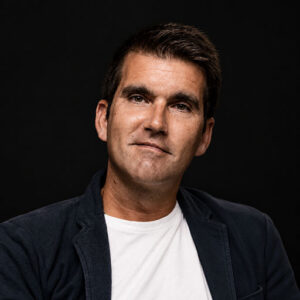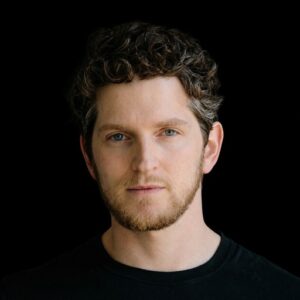
Dutch filmmaker Aaron Rookus premiered his second feature Idyllic in the Big Screen Competition at the 2025 International Film Festival Rotterdam, and the film’s whole philosophy was forged in a hospital corridor and a city bus.
There is no path. The world can just scoop you over.
A Box of Chocolates on the Bus
At twenty-two, in his graduation year at art school with a whole crew ready to shoot, Rookus was diagnosed with testicular cancer. It was caught early, but it spread, and after five years of treatment he was finally told he was clear, only to learn in the same visit that a new and unrelated lump had appeared on his kidney. He’d brought a box of chocolates to thank his doctors for the years of care. He put the box back in his bag, rode home, and ate the whole thing himself on the bus, laughing out loud at the sheer absurdity of it. That laugh is the seed of the film. There was no message in any of it, he realized, no grand plan being revealed, just the plain, freeing fact that the world owes you no arc and no tidy explanation whatsoever.
A Mosaic, Not an Arc
Idyllic follows several generations of one Dutch family, all chasing the same near-impossible thing, the perfect fulfillment of life. A ten-year-old races through a bucket list after a classmate playing fortune teller tells him he has one week left. A grandmother, weary of her life, wishes it would simply end. An opera singer at the peak of her career receives a cancer diagnosis and begins imagining the other life she might have led. A woman who ticked every box, husband, child, house, sits inside a life she chose and doesn’t love. A man in his forties, newly out of the closet, goes looking for happiness and keeps reaching for it the wrong way. And hovering at the edges is a husband modeled on Rookus’s own father, a man simply waiting out the years until retirement, hiding behind his newspaper, alongside the small, devastating piece of paternal advice Rookus keeps from his life: you’re not special, remember that.
Here’s the stance worth drawing out, because the form is the whole argument. Rookus tried twice to tell this as a single protagonist with a clean arc, an opera singer learning to make peace with dying, and threw it away both times, because a single arc inevitably implies a path: a problem, a journey, a lesson, a resolution. That is precisely the lie the film exists to refute. If the world can scoop you up mid-sentence, then a story honest to that truth cannot be shaped like a life that makes tidy sense. So he abandoned the arc and wrote only the scenes he loved, then handed the chaos to a script editor who sorted them into worlds and themes. That editor, Anna Sinek, came to him through Boost NL, one of several European development programs (he went through EAVE as well) that pair filmmakers with seasoned international script editors over months of revision, and Rookus is candid that the single hardest task on the whole film was working backward from his tangle of interwoven scenes to a synopsis short enough to pitch. The mosaic is the only form that tells the truth: a dozen lives running in parallel, none fully resolving, each one’s meaning legible only in relation to the others.
One thing can be very sad for one character, but because it’s the opposite of another character, it can become funny.
Why It Has to Be Funny
That line explains why the humor is load-bearing rather than decorative. In a single tragic arc, grief is total and self-serious. In a mosaic, a grandmother begging to be released from life sits right beside a ten-year-old sprinting through his bucket list, and the juxtaposition makes both unbearable and absurd at once, which is the actual texture of being alive. It is the box of chocolates eaten on the bus while you laugh at your own second tumor. Rookus calls the result a kind of sassy comedy walking a thin line, and the film has been praised for exactly that delicate blend of earnest feeling and ironic wit. The structure has a hidden cost that doubles as its meaning: because every thread holds up the others, he couldn’t cut a single one, even when a late financial gap shaved his shoot from thirty-seven days to thirty-one. You don’t get to remove the hard parts without collapsing the whole, which is also the film’s claim about life itself.
The Structuralist’s Lineage
Rookus has loved non-linear structure since he was a teenager, and the film that rewired him is a touchstone he returns to with obvious delight.
Tom Tykwer’s Run Lola Run showed him, at a formative age, what you could do with structure, that you could simply start the story over and let tiny choices fork into entirely different fates. He was so taken that at fourteen he wrote a three-character, three-perspective film built on the same idea. The other patron saint here is Charlie Kaufman, whom Rookus calls a major inspiration for Idyllic, for the way films like Adaptation and Eternal Sunshine of the Spotless Mind dive between dimensions and nest story worlds inside each other. He also points to American Beauty as his model for what it means to truly be present, to notice the beauty in front of you instead of living in the future you’re planning or the past you regret. The film belongs in conversation with two works he doesn’t name: Robert Altman’s Short Cuts, the great crisscrossing mosaic of Los Angeles strangers whose separate lives keep brushing past one another, and Krzysztof Kieslowski’s Three Colors trilogy, where interlocking European lives reach for connection and meaning across chance and fate.
Loneliness and the Reason to Keep Going
Underneath the comedy runs a real worry about modern isolation. Rookus describes feeling like one of the human batteries in The Matrix, plugged into a system, and he traces a thread from that to a wider loneliness: the city where everyone lives stacked close together yet knows no one, the gated architecture of hallways and locked doors that ensures you never meet a neighbor, the man asleep or worse on the sidewalk whom passersby simply step over. He doesn’t pretend an individual can fix any of it. What he offers instead is the reason he keeps making films at all: he says he would not know what to do otherwise, that every time one film is finished he already has three new stories in his head. There’s a homecoming sweetness to where it all landed, too. Rookus premiered the film an hour from Amsterdam in a sold-out 400-seat IMAX, where his family, friends, and colleagues could all simply show up, a low-key, no-fancy-dresses warmth he contrasts with the lonely experience of premiering a small film to twenty strangers at an 11 a.m. slot somewhere far from home.
His advice to his younger self is the same thing the movie quietly argues to its audience: do your own stuff, don’t copy anyone, stop waiting for a path to appear, and learn to embrace the unforeseen, because that, in the end, is the only real fulfillment actually on offer.