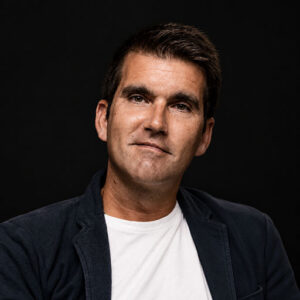
Egil Pedersen’s My Father’s Daughter made history as the first Sami-language film to premiere at the Toronto International Film Festival, and it’s a comedy, which is precisely the point. Pedersen grew up in Sirma, a village of a couple hundred people in Sápmi, the Sami homeland in Norway’s far north, bullied at school and starved for the wider world until Twin Peaks landed on the one TV channel he could get when he was fourteen and rewired his brain. He spent the next two decades being prolific on purpose, eighteen-plus music videos and fifteen shorts, treating each as a rung toward the feature he’d dreamed of since he was a teenager.
A Sami Teen, a Danish Dream Dad, and Jaime Lannister
The setup is a small marvel of comic premise. Elvira, a confident Sami teenager played by breakout Sarah Olaussen Eira and raised by a lesbian single mother, is certain she was conceived at a Danish fertility clinic and has spent her life imagining the donor as movie star Nikolaj Coster-Waldau, the Game of Thrones actor, who turns up throughout the film as her imaginary dream father, playing himself. Having all but rejected her Sami identity in favor of this Danish fantasy, Elvira’s world tips over when her real, possibly Sami, biological father appears, and she overcorrects into a Sami-ness that’s just as performed as the Danish one. In one perfect production-design gag, her Coster-Waldau poster gets swapped for a poster of a film about Sami identity.
Pedersen only had Coster-Waldau for a single day, shot at the main location in northern Norway rather than flying the production to LA, and he built the script so it would work even if the star never showed. That contingency planning turned out to be invisible: the dream-dad device lands so naturally you’d never guess it was one day’s work. It’s the same conceit Ken Loach used in Looking for Eric, where a struggling man conjures the footballer Eric Cantona, playing himself, as an imaginary mentor.
Identity, Given and Chosen
Underneath the gags sits the question Pedersen has been circling his whole life.
Is it something you’re given? Is it something you choose or something someone else gives you?
He knows the ache firsthand. As a Sami person who doesn’t speak the language fluently, he’s felt not Sami enough for his own community, while also experiencing racism from outside it for his Sami features. His satirical short Indigenous Police and an accompanying op-ed titled “What is the right way to be a Sami?” set off a genuine public debate, drawing a response from the Sami Parliament, which eventually changed a rejection-letter policy he’d criticized. That’s the soil My Father’s Daughter grows from, and here’s the stance the film quietly makes: identity is a performance you’re always auditioning for, and Elvira inventing a Danish movie star for a father isn’t a punchline, it’s the exact logic of a kid told she isn’t enough of her own people deciding that if identity gets assigned by others, she’ll assign herself a better one. The film extends the same generosity to everyone performing a self they’re not sure they’re allowed to claim, which is why the flawed father became the favorite. It rhymes with Chris Eyre’s Smoke Signals, another indigenous coming-of-age story that meets an absent, imperfect father with humor instead of judgment.
Why Comedy Is the Hardest Thing
The episode’s spine is Pedersen’s hard-won theory of comedy, and it’s anything but light. Comedy, he argues, is the riskiest genre of all: call something a comedy, screen it, and if nobody laughs, you’ve simply failed, with no aesthetic alibi to hide behind.
Comedy has to be more dramatic than drama.
His model is precise. A comic character is just a dramatic character with the equalizer cranked, less able to understand himself, more violently driven, the pain pushed bigger until it tips into laughter. And comedy needs a real dramatic spine to hang on, a desire line, a clothesline, he says, onto which the funny material gets pinned; thirty minutes of pure jokes with no drive underneath will exhaust anyone. On set, his most frequent note to actors was the cardinal rule of the form: don’t act like you think it’s funny. You read it as funny, but the character isn’t enjoying any of this; the audience laughs, never the player. The deeper move is that by making the first Sami-language film to reach a stage like TIFF a comedy rather than a solemn ethnographic drama, Pedersen stakes a claim, the right to be silly and complex and human, not a museum specimen, is itself a form of full personhood that minority cinema is rarely granted. His touchstones are Twin Peaks and the 1990s Coen Brothers, Fargo and Blood Simple, filmmakers who know genre so thoroughly they can break its rules and let silliness and dread share a frame.
The comedy wasn’t even Pedersen’s original plan. He first wrote the story as something supernatural, until a script consultant told him flatly that it was funny, and rereading his own pages, he realized the man was right. He’d always carried a humor he could never quite deploy in private life, and filmmaking finally gave it somewhere to go.
The Film Behind the Film
For My Father’s Daughter specifically, Pedersen points to one film: Lukas Moodysson’s 1998 Swedish debut Show Me Love.
Moodysson’s story of two teenage girls falling tentatively in love in a dull small town is the tonal blueprint, a youth film daring enough to be complex, funny, and genuinely moving for grown-ups too, and the homage runs deep. The Sami title of Pedersen’s film, Biru Unjárga, translates roughly to “Fucking Unjárga,” a direct nod to Moodysson’s original title, Fucking Åmål, named for the small town its heroine longs to escape. Even the international retitling rhymes: Fucking Åmål became Show Me Love for English markets because a trade magazine wouldn’t run the ad, exactly the kind of sales-driven retitling Pedersen shrugs about when he notes a distributor can rename his film whatever sells.
Getting It Seen
Pedersen is refreshingly practical about how a tiny Sami comedy reaches the world’s biggest festivals. He casts the process as a relay among several hands: a TIFF programmer flew to Norway and watched two dozen films in a few days, the German sales agent Pluto Film worked its contacts, and the Norwegian Film Institute pushed alongside them, until the film simply had to fit the festival’s programming that year. Two Norwegian films went to Toronto that season, his and Erik Poppe’s Quisling. After TIFF and Reykjavik he was hunting sales and territories while planning a seven-stop tour through the north ahead of the national premiere in Tromsø, because in Norway, he notes wryly, it’s mostly kids’ films and war movies that move tickets. His advice to his younger self is the engine of the whole career: go out and make films instead of developing forever, keep the budget low and the script closer to eighty pages than a hundred and twenty, because nobody hands a first-timer much money, and the only way to be ready for the big set is to have already done it, badly and often, a hundred times before.