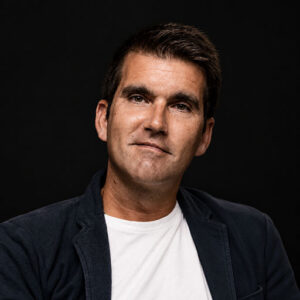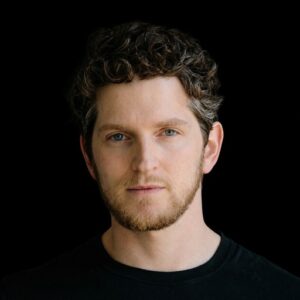
David Joseph Craig and Brian Crano, married co-directors, took the most frightening chapter of their own lives and turned it into a comedy where the bodies pile up. I Don’t Understand You, which premiered at SXSW and is now in theaters, begins as a sweet romcom about a couple’s anniversary trip to Italy and, at the midpoint, curdles into a blood-soaked farce.
I’m the lady in the woods with the flashlight about to get cut up.
The Trip That Became a Horror Film
The first act is close to autobiography. Craig and Crano were navigating an adoption, had survived a devastating adoption scam, and matched with their birth mother just days before a long-planned anniversary trip to Italy. Nick Kroll and Andrew Rannells play the on-screen versions, Dom and Cole, two pampered Americans with almost no Italian who get lost on the way to a farmhouse dinner outside Orvieto, stick their rental car in a ditch in a downpour, and, through a spiral of misunderstanding, accidentally kill a beloved local. The body count climbs from there. Casting came together with uncharacteristic speed for an indie: Rannells was the directors’ instant first choice, and they floated Kroll after hearing him talk on a podcast about newly becoming a parent, an experience that mirrored their own; Rannells simply forwarded him the script, and by the following Monday both were aboard, with Amanda Seyfried as the prospective birth mother. The real turning point happened to the directors too: stranded in a rural ditch, they called their friend and producer Joel Edgerton, told him the story, and he said, mate, it’s a horror film. The note unlocked everything, because the dread they had been living suddenly had a genre to live inside.
Why a Comedy Is Secretly Horror
Here’s the stance worth drawing out, because the pair treat the genre swerve as a craft decision and it is really something deeper. The blend is not a clever structure applied to their story; it is the only honest formal equivalent of what they lived. Consider the actual emotional shape of becoming a parent: the warm, almost romantic-comedy hope of building a family sitting directly on top of an abyss of helplessness, the scam, the total loss of control over the thing you want most, the dread that it could all be taken away. That is not a romcom with a horror twist. It is the real structure of impending parenthood, where unbearable tenderness and unbearable terror occupy the same instant. Crano’s image of being the woman in the woods with the flashlight is the key: you are about to love someone so much that your vulnerability becomes total, and horror is the only genre whose grammar, helplessness and darkness and a thing you cannot control coming for you, matches that feeling. So when they say a genre element smuggles real stakes past an audience, they undersell their own discovery. The blend is not a delivery system for the theme. The blend is the theme. The comedy, they admit, simply followed from who they are: once two self-described deeply silly people sat down to write a horror film, it was never going to stay solemn for long.
Two Jokes and a Lot of Circumstance
This is why Craig’s account of the comedy matters more than it first sounds.
We have maybe two jokes in the movie. The rest is all based on circumstance and human interaction.
Circumstance-based comedy and horror are mechanically identical: both drop ordinary people into a situation that escalates beyond their control, and the only variable is whether the escalation makes you laugh or scream. A couple who cannot understand the language around them is simultaneously the setup for the funniest farce and the most isolating nightmare, which is exactly why the title cuts both ways, the comedy of “I don’t understand you” and the marital terror of it. The film runs on a single engine, two people out of their depth, and because that engine powers both genres, the swerve from one to the other costs nothing structurally. It was always the same machine. What the Edgerton lineage adds is the physical proof: Nash Edgerton, who produced and choreographed the stunts, built his whole art on comedic action, and a pratfall and a kill are blocked identically, the difference living entirely in that half-second before you know which one you are watching. Once the film makes its turn, it wastes no time, the carnage arriving with a speed that has left audiences laughing and wincing in the same breath.
A Lost Dog and a Dead Body
Their stated reference is a film almost nobody remembers.
Crano points to Eugene Levy’s 1992 caper Once Upon a Crime, in which Americans abroad set out to return a lost dog for a reward and stumble into a murder, a movie he loves precisely because it stays joyfully silly while keeping its characters’ needs sky-high. That, he argues, is what a lot of recent comedy forgot, selling out its characters for the gag until the whole genre flattened, which is why so many filmmakers now reach for a genre hybrid to smuggle real emotion back in. Craig, for his part, traces his instincts to a tumultuous childhood and a lifelong love of films that begin as domestic stories and detonate into genre, the likes of True Lies and Robert Zemeckis’s Death Becomes Her. The film also sits beside two titles the pair do not name: Jordan Peele’s Get Out, the modern template for a social comedy of discomfort that swerves into horror with its theme fully loaded, and Roman Polanski’s Rosemary’s Baby, the original argument that impending parenthood is, structurally, a horror story.
Married, and Making the Same Movie
The two come at filmmaking from opposite doors. Crano trained as an actor at UCLA and a London drama school and had already directed features, casting Craig, his husband, in one of them. Craig learned on the job across a decade with Joel Edgerton, which he calls his film school. As a directing duo they describe an almost frictionless shorthand, their taste so aligned that disputes never turned into fights, and they offer it as advice for any collaboration: make sure everyone is making the same movie. It is not a platitude in their case, since they sometimes split into separate units on set, one taking the stunt team, with the result that footage occasionally surfaced in the edit that one of them had genuinely never seen. The shoot itself ran for months in Rome and the Italian countryside, with a local crew, and Craig is candid that the Edgerton name did real work in getting it financed, since an offer to spend half a year in Italy makes prospective backers prick up their ears. That edit was shaped by veteran cutter Nancy Richardson, brought on at a producer’s insistence, the outside eye that helped them find the film’s slippery, hard-won tone. What holds the whole risky experiment together is the thing they keep circling back to, the authentic chemistry between two leads playing a version of the directors themselves, and a refusal to choose between the joy and the dread when the truth was always both at once. One early viewer summed the tone up as Under the Tuscan Sun colliding with a very bad night, which is about right, and exactly what they were after.